Holland Tunnel Soot and Hydrocarbon Extraction
Jersey City hosts massive daily commuter volume. Holland Tunnel traffic produces heavy diesel exhaust. The airborne hydrocarbon soot settles across local burial grounds like Holy Name Cemetery. The sticky pollution traps secondary environmental dust. Solar radiation bakes this mixture onto granite monuments. A thick black crust obscures the original stone color. Standard washing protocols fail against industrial grease. Field technicians apply commercial alkaline degreasers. The chemical dissolves the hydrocarbon bond. Low-pressure water flushes the heavy sludge. The original granite polish returns. The stone surface resists immediate re-contamination.
Historic Brownstone Delamination and Consolidation
Historic plots in Jersey City feature antique brownstone markers. This sedimentary red sandstone suffers from severe structural delamination. Ambient moisture infiltrates the horizontal bedding planes. Winter temperature drops freeze the trapped water. The expanding ice splits the rock layers. The front face of the monument flakes away. Abrasive cleaning destroys the fragile stone. Field crews apply low-viscosity stone consolidants. The specialized fluid penetrates the porous sandstone matrix. The chemical deposits new silica binders. The internal structure hardens. The consolidation halts the active shedding. We preserve the remaining carved details. The original masonry maintains its historic integrity. We manage faded inscriptions via headstone lettering restoration.
Wildlife Tunnels and Foundation Elevation
Urban wildlife creates severe foundation hazards. Groundhogs excavate deep burrows beneath massive granite bases. The tunneling removes the supporting soil. The heavy monument crushes the empty den. The stone tilts or collapses into the void. Field crews manage cemetery monument foundation lifting. Mechanical gantries hoist the displaced stone. Technicians excavate the compromised dirt. We install an angular crushed rock foundation. The heavy gravel fills the animal tunnels. Wildlife avoids digging through sharp stone. The rock pad provides static load-bearing support. We reset the granite base flush and level. We eliminate the physical safety hazard. The deep gravel forces water drainage.
Hudson River Salt Haze and Poultice Application
Hudson River winds carry continuous salt spray across the local elevation. Sodium chloride settles on polished granite faces. The salt crystals form a cloudy white haze. The mineral accumulation etches the factory finish over time. Field technicians apply chemical extraction poultices. The thick paste covers the salt deposits. The chemical absorbs the sodium chloride. The paste dries over several days. Technicians peel the dry material away. The white haze detaches from the stone. The original mirror finish returns. The extraction prevents microscopic pitting.
Iron Enclosure Rust and Chelating Agents
Victorian family plots feature antique iron pipe enclosures. Atmospheric moisture oxidizes the exposed iron. The metal degrades into orange rust. Rain washes this corrosive runoff onto the adjacent granite coping and headstones. The iron oxide penetrates the porous rock matrix. The deep orange stains resist standard soap. Field crews apply specialized chelating agents. The liquid neutralizes the iron oxide. The chemical reaction turns the orange rust purple. Low-pressure hoses flush the dissolved metal. The stone returns to a uniform color.
Acid Rain and Bronze Oxidation
High industrial density creates acidic precipitation. Acid rain degrades white marble monuments. The acid dissolves the natural calcium binder. The smooth stone surface degrades into loose sand. This structural breakdown causes inscription loss. Soft bristle brushes clear surface dirt. We preserve the remaining structural mass. The damp river air also accelerates bronze oxidation. Bare copper alloy turns a chalky green color. Black algae colonizes the porous oxidized layer. We execute bronze memorial refinishing. Chemical strippers dissolve the green corrosion. Heavy abrasive blocks cut the raised letters down to the bare metal. Specialized torches heat the plaque. Technicians melt solid wax into the metal pores. The wax blocks ambient moisture. The barrier stops future marine oxidation.
Overgrown Ivy and Structural Epoxy Injection
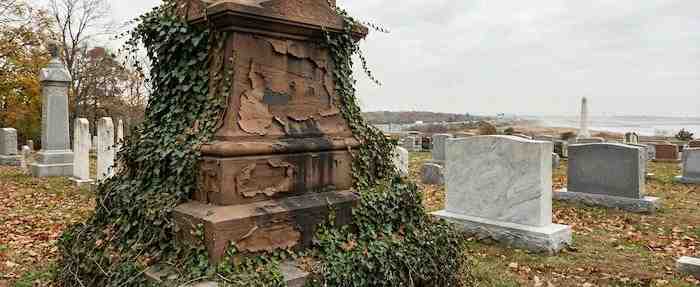
Neglected plots face aggressive ivy overgrowth. The vines drive rootlets into masonry joints. The plant expansion pushes the stone blocks apart. Technicians sever the main stems at the soil line. The isolated plant starves. The rootlets turn brittle. The dead vines detach from the rock face. We excavate the underground root ball. Technicians repoint the damaged mortar seams. We inject structural stone epoxy into the open cracks. The resin locks the blocks together. We execute tombstone repair and restoration.
Logistics and Service Verification
Jersey City logistics require precise operational planning. Historic cemetery roads feature narrow layouts. Remote plots lack direct water access. Our mobile units carry dedicated water supplies. We handle all cemetery compliance paperwork. Clients receive a flat rate upfront. You track the project progress remotely. Field crews upload the final timestamped verification photo via our mobile and web app. The digital platform stores the service records. We execute detailed cemetery plot maintenance across the region. We provide reliable headstone cleaning Jersey City.
- Hydrocarbon Extraction: We dissolve heavy Holland Tunnel soot using alkaline degreasers.
- Brownstone Consolidation: We inject silica binders to harden flaking sedimentary rock.
- Groundhog Tunnel Leveling: We pack heavy crushed rock under collapsing monuments.
- Salt Haze Removal: We peel Hudson River chlorides out of granite with chemical poultices.